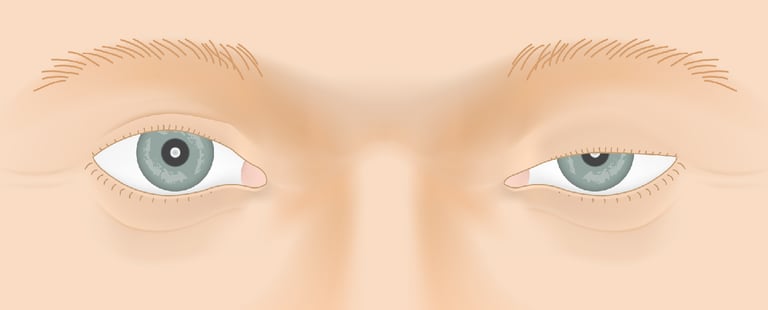
Upper Blepharoplasty
Upper blepharoplasty constitutes the surgical repair or reconstruction of the upper eyelid including management of upper eyelid skin, orbital septum, any underlying ptosis, and excess or deficient preaponeurotic and medial orbital fat. Blepharoplasty may be performed for cosmetic or reconstructive reasons, often both.
Risks
Superficial Ecchymosis and Hematoma: > 50%
Wound Dehiscence < 1%
Scar Abnormalities 1% - 2%
Upper Eyelid Overcorrection : 1% - 3%
Asymmetry: 3% - 5%
Ptosis : 1% - 2%
Epiphora and Ocular Discomfort10% - 20%
Diplopia < 0.5%
Ocular Injury < 0.1%
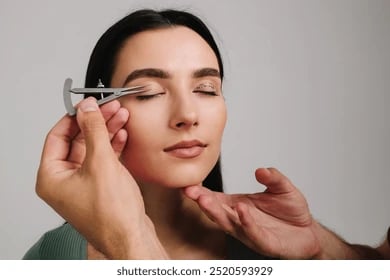
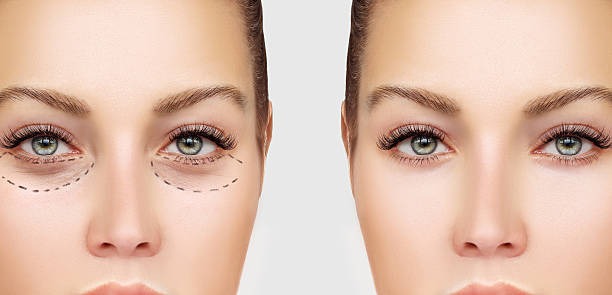
Lower Blepharoplasty
a surgical technique for correcting defects, deformities, and disfigurations of the eyelids; and for aesthetically modifying the eye region of the face. With excision and removal of skin and adipocyte fat and the reinforcement of the corresponding muscle and tendon tissues, blepharoplasty resolves functional and cosmetic problems of the periorbita, which is the area from the eyebrow to the upper portion of the cheek.
Risks
Infection: < 1%
Bleeding: 1% - 5%
Wound separation (Dehiscence): 1% - 2%
Suture cysts (Milia): 1% - 2%
Asymmetry: 3% - 5%
Insufficient skin or fat removal (Undercorrection): 2% - 5%
Excessive muscle removal (Can lead to retraction/ectropion): 1% - 3%
Excessive internal and external scarring: 1% - 2%
Rounding at the lateral commissure: 1% - 2%
Swelling on the eyeball surface (Chemosis): 2% - 8%
Lacrimal duct injury: < 1%
Double vision (Diplopia - usually temporary): < 1%
Loss of vision (Due to retrobulbar hemorrhage): < 0.1%.
Anesthetic complications: < 1%
Blepharoptosis Repair
Blepharoptosis surgery (ptosis repair) corrects droopy upper eyelids by tightening the levator muscle, often combined with blepharoplasty to remove excess skin/fat for functional vision improvement and a youthful appearance.
Undercorrection / Hypocorrection (5% - 15%)
Overcorrection (2% - 8%)
Asymmetry (5% - 10%)
Dry eyes / Exposure keratopathy (2% - 10%)
Lagophthalmos / Incomplete eyelid closure (1% - 5%)
Eyelid contour irregularities / Notching (1% - 3%)
Suture reactions / Inflammation (~1%)
Infection (< 1%)
Severe complications (e.g., vision loss) (< 0.1%)
Risks