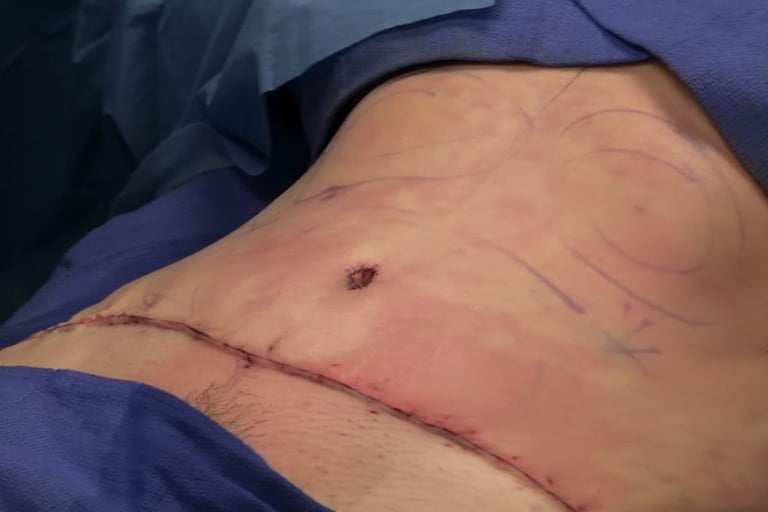
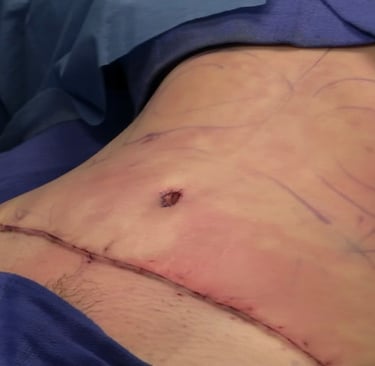
Abdominoplasty
This procedure reshapes the abdomen by removing excess skin and fat and repairing separated core muscles (diastasis recti). It is the primary solution for restoring a toned, contoured midsection when diet and exercise alone cannot fix the structural changes caused by pregnancy or massive weight loss.
Risks
Common Complications (1% – 15%)
Seroma (Fluid Accumulation): 5% – 15%. This is the most frequent complication, where straw-colored fluid builds up under the skin flap.
Hematoma (Blood Accumulation): 1% – 3%. This typically occurs within the first 24 hours and may require surgical evacuation.
Wound Dehiscence (Incision Separation): ~5%. Small areas of the incision may pull apart, particularly in high-tension areas.
Hypertrophic Scarring: 3% – 5%. The risk of thickened, raised, or widened scars.
Sensation Changes: Very common (up to 70%–80% in the short term). While most recover, permanent numbness occurs in a smaller percentage of patients.
Moderate to Serious Risks (0.5% – 2%)
Skin or Fat Necrosis: 1% – 2%. Tissue death due to inadequate blood supply. This risk increases up to 10% in active smokers.
Infection: 1% – 2%. Most are superficial skin infections that respond well to antibiotics.
Umbilical (Belly Button) Complications: ~1%. Includes shape changes, stenosis (narrowing), or loss of the belly button due to vascular issues.
Major Systemic Risks (< 1%)
Deep Vein Thrombosis (DVT): 0.5% – 0.8%. Blood clots forming in the deep veins, usually in the legs.
Pulmonary Embolism (PE): ~0.3%. A life-threatening condition where a blood clot travels to the lungs.
Anesthesia Complications: < 0.01% in healthy patients.